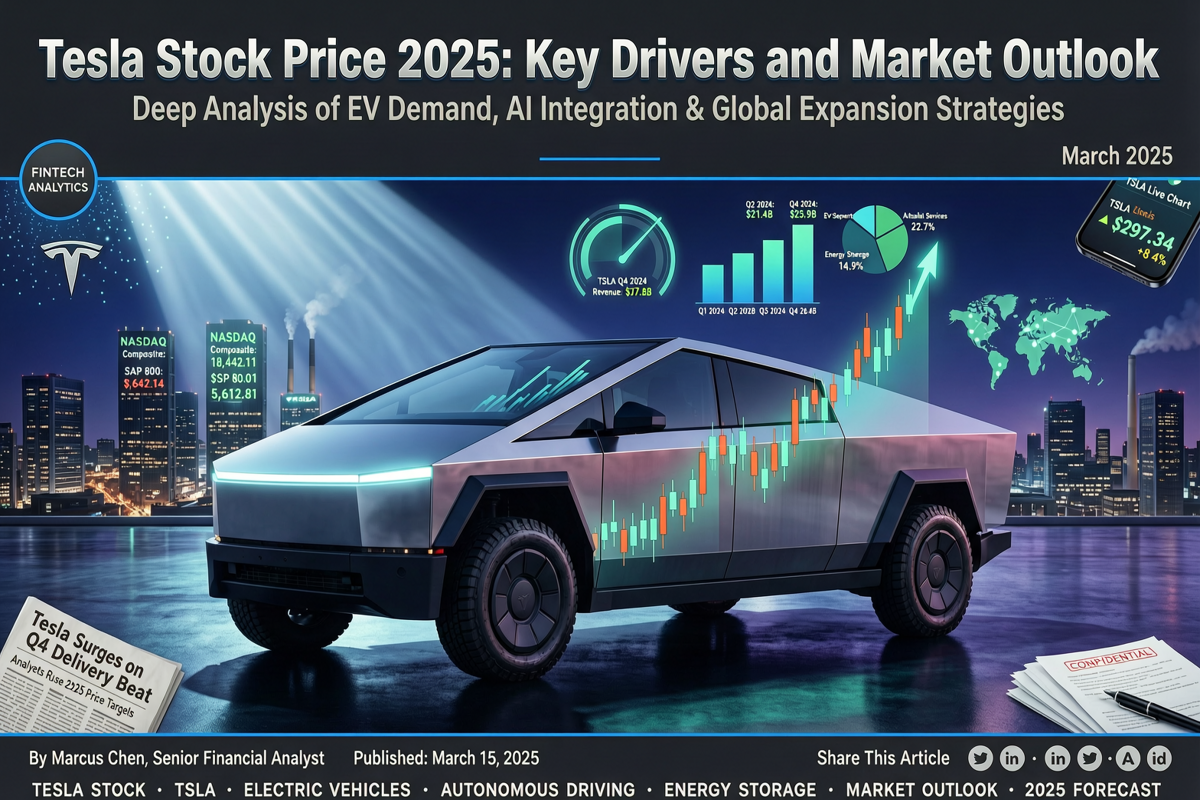
Tesla Stock Price 2025: Key Drivers and Market Outlook
Explore the key drivers behind Tesla stock price in 2025, including EV demand, regulatory changes, and competition. Get expert insights on market trends.
Introduction
Tesla Inc. (TSLA) remains one of the most closely watched stocks on Wall Street, and 2025 is shaping up to be a pivotal year. With electric vehicle (EV) adoption accelerating, regulatory shifts, and intensifying competition, investors are keen to understand what lies ahead for Tesla's share price. This article delves into the key drivers influencing Tesla stock in 2025 and offers a balanced outlook for investors.
Key Drivers of Tesla Stock in 2025
1. Global EV Demand and Market Penetration
The global EV market is projected to grow at a compound annual growth rate (CAGR) of over 20% through 2030. Tesla, as a market leader, stands to benefit from this trend. However, growth rates are slowing in mature markets like the U.S. and Europe, while emerging markets in Asia and South America present new opportunities. Tesla's ability to capture market share in these regions will be critical.
2. Regulatory Environment and Government Policies
Government incentives and emissions regulations play a significant role in EV adoption. In 2025, the U.S. Inflation Reduction Act continues to provide tax credits for EV buyers, but eligibility requirements tied to battery sourcing and assembly are tightening. Meanwhile, the European Union's ban on new internal combustion engine vehicles by 2035 is driving demand. Any changes in these policies could directly impact Tesla's sales and stock price.
3. Competition from Legacy and New Entrants
Traditional automakers like Ford, General Motors, and Volkswagen are ramping up EV production, while Chinese manufacturers such as BYD and NIO are expanding globally. Tesla's competitive advantages include its Supercharger network, software ecosystem (FSD), and brand loyalty. However, pricing pressure and margin compression are real risks as more models enter the market.
4. Production Capacity and Supply Chain
Tesla's factories in Fremont, Shanghai, Berlin, and Texas are expected to reach combined annual capacity of over 3 million vehicles by 2025. Supply chain issues, particularly for lithium, cobalt, and semiconductors, remain potential bottlenecks. Tesla's efforts to vertically integrate battery production through its 4680 cells could mitigate some risks and improve margins.
5. Technological Innovations: Full Self-Driving (FSD) and Beyond
FSD technology remains a high-risk, high-reward factor. Regulatory approvals for Level 4/5 autonomy could unlock significant revenue streams through robotaxi services. However, delays or safety incidents could weigh on sentiment. Additionally, Tesla's energy storage and solar businesses are growing, providing diversification beyond automotive.
6. Macroeconomic Factors and Interest Rates
Interest rates and inflation affect consumer purchasing power and Tesla's borrowing costs. In 2025, central banks may begin easing monetary policy, which could boost demand for big-ticket items like EVs. Conversely, a recession could dampen sales. Tesla's stock, as a high-growth name, is particularly sensitive to interest rate expectations.
Market Outlook and Analyst Views
Wall Street analysts are divided on Tesla's 2025 outlook. Bullish analysts cite Tesla's technological lead, expanding margins, and potential for autonomous driving breakthroughs. Price targets range from $300 to $500 per share. Bearish analysts point to valuation concerns, increasing competition, and Elon Musk's distractions. Their targets are around $150 to $200. The consensus is a hold rating with a median target of $250, implying modest upside from current levels.
Risks to Consider
- Valuation: Tesla trades at a premium multiple compared to traditional automakers, making it vulnerable to sentiment shifts.
- Elon Musk's Leadership: His involvement in other ventures (X, xAI) and controversial statements can create volatility.
- Regulatory Hurdles: Delays in FSD approval or changes in EV tax credits could hurt growth.
- Geopolitical Tensions: Trade disputes, especially between the U.S. and China, could disrupt Tesla's supply chain and sales.
Conclusion
Tesla stock in 2025 is a tale of two narratives: a disruptive growth story with immense potential and a mature company facing headwinds. Investors should monitor EV demand trends, regulatory developments, and Tesla's execution on production and innovation. While the stock may remain volatile, those with a long-term horizon could benefit from Tesla's leadership in the transition to sustainable energy. As always, diversification and due diligence are key.