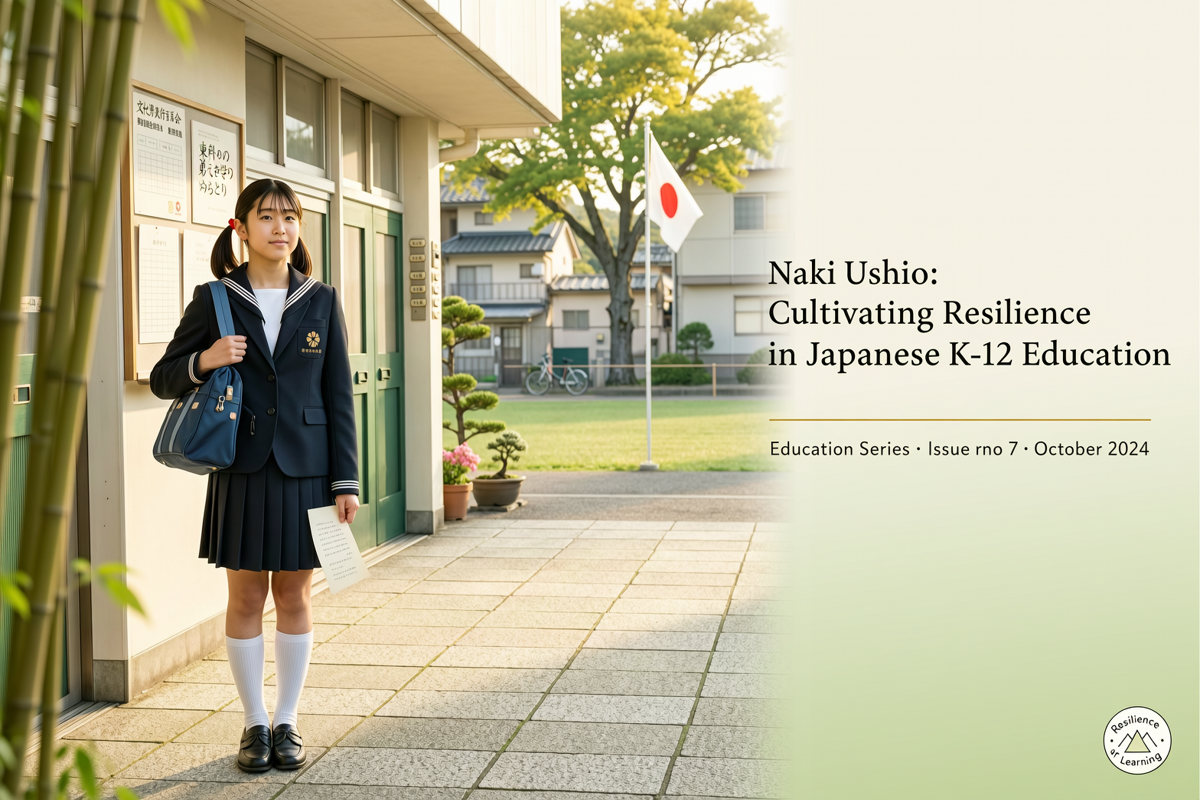
Naki Ushio: Cultivating Resilience in Japanese K-12 Education
Explore how Naki Ushio, a unique educational approach in Japan, fosters resilience and empathy in K-12 students through experiential learning and community.
Introduction: What Is Naki Ushio?
In the landscape of Japanese primary and secondary education, a distinctive practice known as Naki Ushio has been gaining attention. Translated roughly as "crying tide," Naki Ushio refers to a pedagogical method that encourages students to express and process their emotions openly, particularly through controlled, guided experiences that may involve crying. Far from being a form of emotional indulgence, this approach is rooted in the belief that acknowledging and releasing emotions is essential for building resilience, empathy, and mental well-being. As Japan's education system evolves to address rising rates of student stress and social withdrawal, Naki Ushio offers a compelling counterpoint to traditional stoicism.
The Philosophy Behind Naki Ushio
Naki Ushio draws from both ancient Japanese concepts of emotional catharsis and modern psychological research. The term itself evokes the image of tears flowing like a tide—natural, cleansing, and necessary. Proponents argue that in a society that often prizes emotional restraint, children need safe outlets to release pent-up feelings. By integrating moments of guided emotional release into the school day, educators aim to prevent the buildup of anxiety and depression. The practice is not about forcing tears but creating an environment where students feel secure enough to be vulnerable.
Historical Roots
The concept has parallels in traditional Japanese arts like Noh theater, where controlled emotional expression is a form of discipline. However, Naki Ushio as a formal educational strategy emerged in the early 2000s, pioneered by educators who noticed that students who occasionally cried during class discussions or reflective exercises showed improved focus and interpersonal relationships afterward. Schools began to experiment with structured activities—such as reading poignant stories, watching emotional films, or participating in gratitude exercises—that naturally evoke tears.
Implementation in K-12 Classrooms
Naki Ushio is not a standalone curriculum but a set of practices woven into existing subjects. In elementary schools, teachers might read a story about a lost pet and then facilitate a discussion about loss and sadness, allowing children to cry if they feel moved. In middle and high schools, it might appear in literature classes analyzing tragic plays or in moral education sessions discussing personal challenges. The key is that the emotional experience is framed positively: tears are not a sign of weakness but of connection and growth.
Age-Appropriate Approaches
For younger students (ages 6-9), activities are brief and closely supervised. Teachers use picture books with themes of friendship and separation, followed by group sharing. For older students (ages 10-15), the approach becomes more introspective, with journaling and peer discussions. High school students (ages 16-18) may engage in community service projects that expose them to real-world hardships, prompting empathetic tears. In all cases, teachers are trained to support students without judgment and to ensure that emotional expression remains a positive, shared experience.
Benefits for Student Development
Research on Naki Ushio is still emerging, but preliminary studies and anecdotal evidence suggest several benefits. Students who participate regularly report lower levels of stress and higher emotional intelligence. They are better able to articulate their feelings and show greater empathy toward peers. Academically, emotional catharsis appears to improve concentration and memory, as students are less burdened by unresolved emotions. Moreover, the practice fosters a sense of community: when one student cries, others offer comfort, strengthening social bonds.
Building Resilience
Contrary to the fear that crying makes children fragile, Naki Ushio builds resilience by teaching that emotions are manageable. Students learn that sadness, grief, or frustration are temporary states that can be expressed and then released. This emotional literacy equips them to handle future challenges without resorting to avoidance or aggression. In a country where "hikikomori" (social withdrawal) is a growing concern, such skills are invaluable.
Criticisms and Challenges
Despite its benefits, Naki Ushio faces criticism. Some parents and educators worry that it may pressure students to cry or that it intrudes on private emotional boundaries. Others argue that it conflicts with the cultural value of "gaman" (endurance). To address these concerns, schools emphasize that participation is voluntary and that the goal is not to induce tears but to allow them. Teachers receive training to recognize when a child is uncomfortable and to respect individual differences in emotional expression.
Cultural Resistance
In a society where emotional restraint is often equated with maturity, Naki Ushio can be controversial. Older generations may view it as coddling. However, advocates point to rising rates of youth suicide and mental health issues as evidence that traditional approaches are insufficient. By normalizing emotional expression, Naki Ushio may help destigmatize seeking help for mental health problems.
Case Studies: Schools Embracing Naki Ushio
Several schools in Japan have adopted Naki Ushio with notable results. For instance, a public elementary school in Kyoto reported a 30% decrease in bullying incidents after implementing weekly emotional sharing circles. A middle school in Tokyo found that students who participated in Naki Ushio activities scored higher on empathy assessments. These case studies are often shared at educational conferences, inspiring other schools to experiment.
A Typical Session
A typical Naki Ushio session in a K-12 setting might begin with a short, emotionally evocative video or story. Students then write in journals about their feelings. Next, they form small groups to share if they wish. The teacher guides the discussion with open-ended questions like "What part made you feel sad?" or "Have you ever experienced something similar?" Tears are acknowledged with quiet respect, and the session ends with a calming activity, such as deep breathing or a positive affirmation.
Conclusion: The Future of Naki Ushio
As Japan continues to grapple with the mental health crisis among its youth, Naki Ushio represents a bold step toward holistic education. By honoring emotions as a natural part of learning, this approach prepares students not just for exams but for life. While it may not be suitable for every cultural context, its core message—that it's okay to cry—is universal. For K-12 educators worldwide, Naki Ushio offers a reminder that sometimes the most profound lessons come not from textbooks but from the heart.