Mindfulness Meditation for Beginners: A Complete Guide to Starting Your Practice
Mindfulness has become one of the most popular approaches to managing stress, improving focus, and cultivating inner peace. For those who are new, understanding mindfulness meditation for beginners is the first step to unlocking its many benefits. This comprehensive guide explores what mindfulness really is, how to begin, practical techniques, and how to integrate it into daily life.
What is Mindfulness Meditation?
Mindfulness meditation is the practice of paying attention to the present moment without judgment. Instead of being lost in thoughts of the past or worries about the future, practitioners learn to observe their thoughts, emotions, and sensations with curiosity and acceptance.
At its core, mindfulness is about awareness. Beginners often struggle because the mind tends to wander. However, this wandering is a natural part of the practice. Each time you notice your mind drifting and bring it back to the present, you are strengthening your mindfulness “muscle.”
Why Start with Mindfulness Meditation for Beginners?
There are many forms of meditation, but mindfulness meditation for beginners is often recommended because it is simple, effective, and accessible to everyone. You do not need special equipment, religious beliefs, or long hours of practice. All you need is a willingness to sit quietly and pay attention.
For beginners, mindfulness provides a foundation for other types of meditation, such as loving-kindness or body scan practices. It teaches basic awareness and helps cultivate focus and calmness before exploring deeper techniques.
Benefits of Mindfulness Meditation
Mental Benefits
- Reduces stress and anxiety by calming the nervous system.
- Improves focus, attention, and memory.
- Helps manage negative thoughts and emotional reactivity.
Physical Benefits
- Lowers blood pressure and improves heart health.
- Boosts immune system function.
- Improves sleep quality and relaxation.
Emotional Benefits
- Increases emotional resilience.
- Promotes self-awareness and self-compassion.
- Encourages a more positive outlook on life.
These benefits are especially powerful for those beginning their journey into mindfulness meditation, as results can be felt within just a few weeks of consistent practice.
Preparing for Your First Mindfulness Session
Before starting, create a supportive environment. Beginners often underestimate the importance of setting up a proper space. Choose a quiet location where you will not be disturbed. Sit on a cushion, chair, or mat in a comfortable position with your back upright but relaxed.
Wearing loose, comfortable clothing is helpful. Some practitioners light a candle or play soft background music, but this is optional. The key is to minimize distractions and allow yourself to focus on the present moment.
Step-by-Step Guide: Mindfulness Meditation for Beginners
Step 1: Find Your Posture
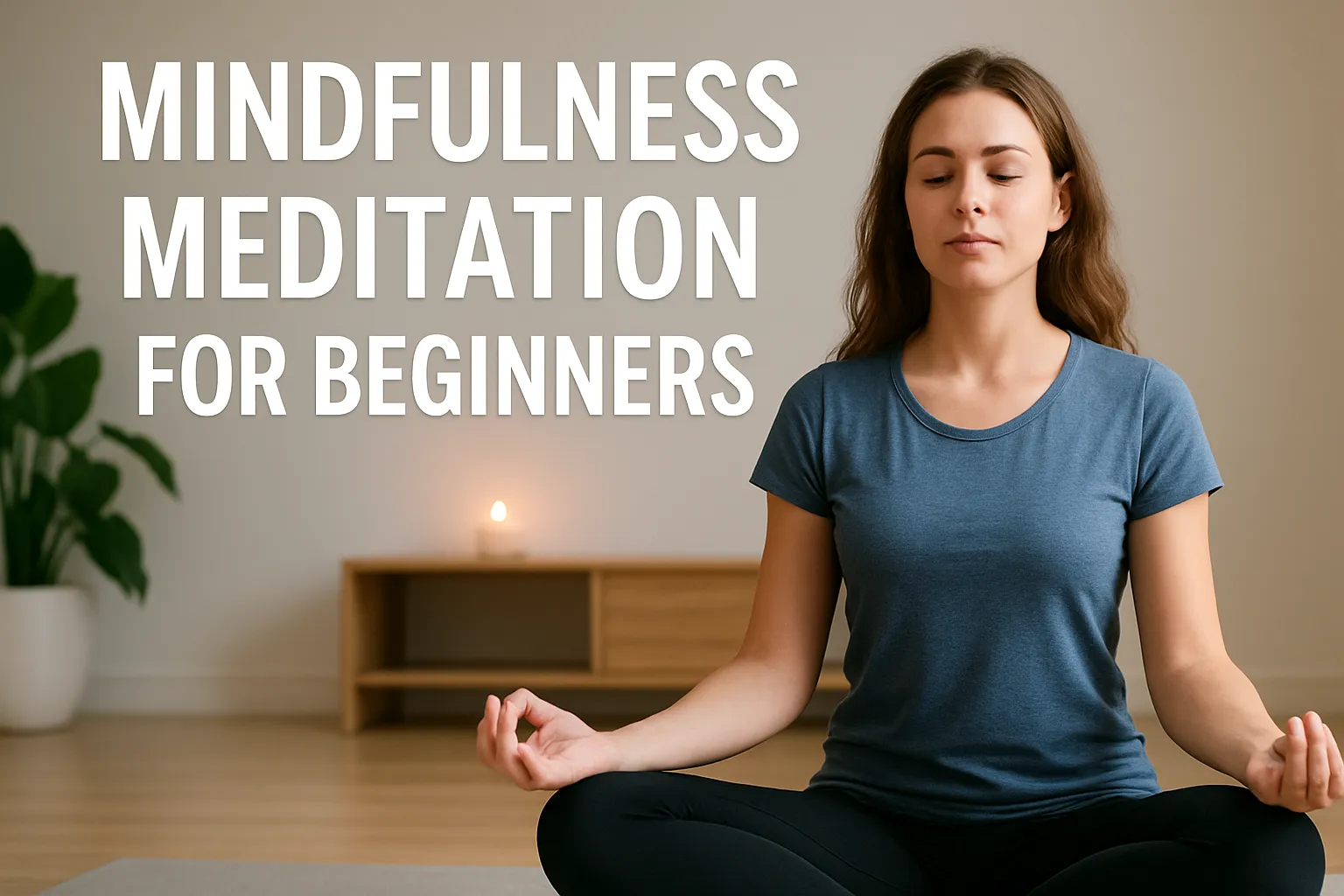
Sit comfortably with your spine straight. Place your hands on your knees or lap. Relax your shoulders and soften your gaze or close your eyes. Good posture helps keep you alert and prevents drowsiness.
Step 2: Focus on the Breath
Direct your attention to your breathing. Notice the sensation of air entering and leaving your nostrils, or the rise and fall of your chest and belly. Breath awareness is the anchor of mindfulness meditation for beginners.
Step 3: Notice When the Mind Wanders
Your thoughts will drift—this is natural. Instead of judging yourself, gently acknowledge the distraction and return your attention to the breath. Each return strengthens your mindfulness practice.
Step 4: Expand Awareness
Once comfortable, broaden your awareness to include body sensations, emotions, and thoughts. Simply observe them without labeling or resisting. This trains non-judgmental acceptance.
Step 5: End with Gratitude
After 5–10 minutes, slowly open your eyes and take a deep breath. Thank yourself for practicing. Even short sessions can make a meaningful difference over time.
Common Challenges for Beginners
Restlessness
Many beginners feel restless or impatient. This is a normal reaction to stillness. Try reducing the session time and gradually increasing it as you build comfort.
Sleepiness
If you feel sleepy, adjust your posture to sit more upright or practice at a different time of day. Mindfulness should cultivate awareness, not drowsiness.
Overthinking
Beginners often wonder if they are “doing it right.” Remember: the goal of mindfulness meditation is not to eliminate thoughts but to observe them without attachment.
Tips for Building a Consistent Practice
- Start with just 5 minutes daily and increase gradually.
- Practice at the same time each day to build a routine.
- Use a guided meditation app or recording if you need structure.
- Keep a meditation journal to track your experiences and progress.
- Join a community or class for motivation and support.
Consistency is more important than duration. Even short daily practices of mindfulness meditation for beginners can lead to lasting changes in the mind and body.
Variations of Mindfulness Meditation
Breathing Meditation
The simplest form for beginners, focusing only on the breath.
Body Scan Meditation
Bringing awareness systematically through each part of the body, noticing sensations and tension.
Walking Meditation
Practicing mindfulness while moving slowly, paying attention to each step, breath, and surrounding environment.
Loving-Kindness Meditation
Cultivating compassion by silently repeating kind phrases for yourself and others.
Exploring these variations keeps your practice fresh and allows you to discover what resonates most with you.
Integrating Mindfulness into Daily Life
Mindfulness meditation for beginners does not have to be limited to sitting practice. You can bring mindfulness into daily activities:
Mindful Eating
Pay attention to the taste, texture, and aroma of food. Eat slowly and savor each bite.
Mindful Walking
Notice the sensation of your feet touching the ground, the rhythm of your steps, and the feeling of air against your skin.
Mindful Listening
Be fully present when someone is speaking. Listen without planning your response or getting distracted.
These small moments of mindfulness throughout the day can greatly enhance awareness and well-being.
Scientific Research on Mindfulness
Over the past two decades, scientific studies have confirmed the effectiveness of mindfulness meditation. Research shows that regular practice reduces stress hormones, improves brain plasticity, and enhances emotional regulation.
Harvard researchers found that just 8 weeks of mindfulness training increased gray matter density in regions of the brain associated with memory, learning, and emotional regulation. Other studies link mindfulness to improved decision-making and overall life satisfaction.
Conclusion
Mindfulness meditation for beginners is a powerful yet simple practice that can transform your mental, emotional, and physical well-being. By learning to focus on the present moment, observe thoughts without judgment, and cultivate awareness, you lay the foundation for lifelong mindfulness. Start small, stay consistent, and explore different techniques until you find the approach that resonates with you. Remember, mindfulness is not about perfection—it is about presence. Your journey begins with a single breath.