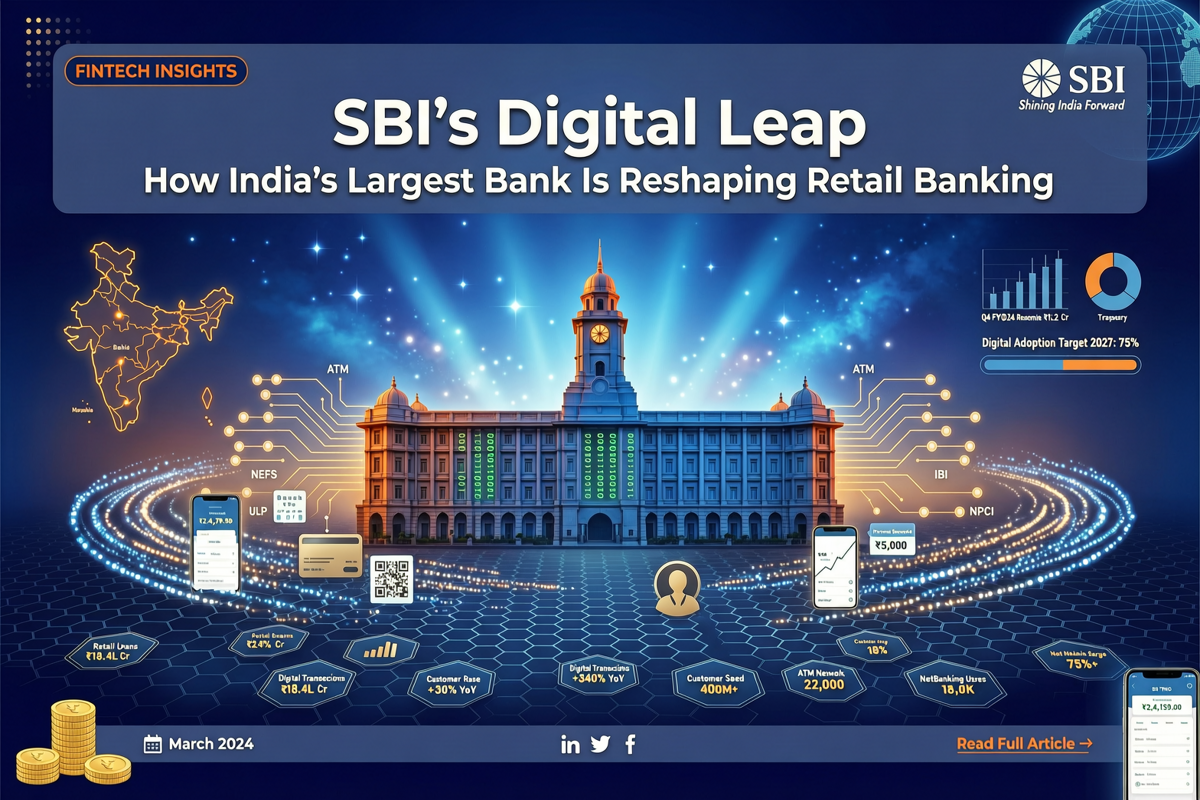
SBI's Digital Leap: How India's Largest Bank Is Reshaping Retail Banki
Explore how State Bank of India's digital initiatives—from YONO to AI-driven services—are transforming banking for millions and setting new industry benchmarks.
The Elephant Learns to Dance: SBI's Digital Transformation
For decades, State Bank of India (SBI) was synonymous with long queues, paper forms, and a legacy system that seemed immovable. But in recent years, the 200-year-old institution has undergone a remarkable digital metamorphosis. Today, SBI is not just India's largest commercial bank by assets, deposits, and branches; it is also a technology powerhouse that is redefining retail banking for over 500 million customers.
This shift is not superficial. Behind the catchy YONO app and the ubiquitous green logo lies a deep recalibration of operations, customer engagement, and risk management. In this article, we unpack the key pillars of SBI's digital strategy and what it means for the average customer, the broader banking sector, and the future of finance in India.
YONO: More Than Just an App
Launched in 2017, YONO (You Only Need One) is SBI's flagship digital platform. It is not merely a mobile banking app; it is an integrated ecosystem that combines banking, investments, insurance, and lifestyle services. With over 100 million registered users, YONO is one of the most widely used banking apps in the world.
The app's success lies in its user experience. Customers can open a savings account instantly, apply for loans, book travel, shop for groceries, and even invest in mutual funds—all from a single interface. The 'YONO LITE' version caters to feature phone users, ensuring inclusivity in a diverse market.
Moreover, SBI has leveraged YONO to cross-sell products. For instance, pre-approved loans and credit cards are offered based on transaction patterns, driving both customer convenience and bank profitability. The result is a stickier customer base and a significant reduction in the cost-to-income ratio.
AI and Machine Learning: The Invisible Backbone
Behind YONO's smooth interface, artificial intelligence (AI) and machine learning (ML) algorithms are at work. SBI uses AI for everything from fraud detection to credit scoring. The bank's 'Intelligent Assistant' (IA) chatbot handles millions of queries daily, resolving issues without human intervention.
One standout application is in loan processing. Using ML models, SBI can now disburse personal loans in under 10 minutes for select customers. The system analyzes credit history, transaction data, and even social media behavior (with consent) to assess creditworthiness. This has opened up credit access to thin-file customers who were previously excluded.
Additionally, SBI employs AI for predictive maintenance of its ATM network, reducing downtime and operational costs. It also uses natural language processing to monitor customer complaints and sentiment, allowing proactive resolution of grievances.
Branch Transformation: From Transactions to Advisory
While digital channels grow, SBI's physical branches are not becoming obsolete—they are evolving. The bank has introduced 'Smart Branches' with self-service kiosks, digital onboarding, and Wi-Fi zones. Staff are being retrained as 'digital enablers' who help customers navigate online services.
In rural areas, SBI has deployed 'Banking Correspondents' equipped with tablets to conduct transactions and open accounts in remote villages. The goal is to combine the trust of a physical presence with the efficiency of digital processes.
This hybrid model is crucial for India, where a large portion of the population still prefers in-person banking. By modernizing branches, SBI ensures no customer segment is left behind.
The Role of Blockchain and Emerging Tech
SBI has also been a early adopter of blockchain technology. It has implemented blockchain-based solutions for remittances, trade finance, and know-your-customer (KYC) processes. The bank is part of the 'Bankchain' consortium, which aims to create a shared ledger for secure and transparent transactions.
In trade finance, SBI's blockchain platform reduces the time for letter of credit issuance from days to hours. For remittances, it offers competitive rates and near-instant settlement. These innovations lower costs and attract a younger, tech-savvy customer base.
Cybersecurity: The Overarching Priority
With great digital adoption comes increased cyber risk. SBI has invested heavily in cybersecurity, employing advanced encryption, multi-factor authentication, and a dedicated Cyber Security Operations Center (CSOC) that monitors threats 24/7.
The bank also educates customers through regular alerts and awareness campaigns. In case of fraud, SBI's resolution mechanism has improved significantly, with a turnaround time of less than 48 hours for dispute resolution in many cases.
Impacts on Financial Inclusion
SBI's digital push aligns with India's financial inclusion goals. The bank has opened millions of Jan Dhan accounts (basic savings accounts) and integrated them with Aadhaar (biometric ID) and mobile numbers (JAM trinity). Digital payments, especially through UPI, have become ubiquitous, and SBI is a key player in this ecosystem.
Moreover, the bank's 'SBI Green Homes' initiative offers lower interest rates for energy-efficient housing loans, combining sustainability with digital processing. Such innovations show how digital tools can also promote social and environmental causes.
Challenges and the Road Ahead
Despite successes, SBI faces challenges. Legacy system integration remains complex, and some digital initiatives have faced scalability hitches. Competition from nimble fintechs and new private banks is fierce. SBI also has to manage a massive workforce accustomed to traditional ways.
To stay ahead, SBI is likely to deepen its use of AI, explore open banking through APIs, and possibly launch a digital-only bank subsidiary. Partnerships with fintechs (like its tie-up with Google Pay) will continue. The bank's massive data advantage—if harnessed responsibly—could give it an edge in personalized banking.
Conclusion: A Blueprint for Legacy Banks
SBI's digital journey is a masterclass in how a legacy institution can reinvent itself without losing its core strengths. By embracing technology while preserving its vast network and trust, SBI has managed to grow its digital user base, reduce costs, and enhance customer satisfaction.
For other large banks worldwide, especially in emerging economies, the SBI story offers valuable lessons. The elephant can indeed dance—if it learns the right steps. As SBI continues to evolve, one thing is clear: the future of banking in India is digital, and SBI intends to lead it.