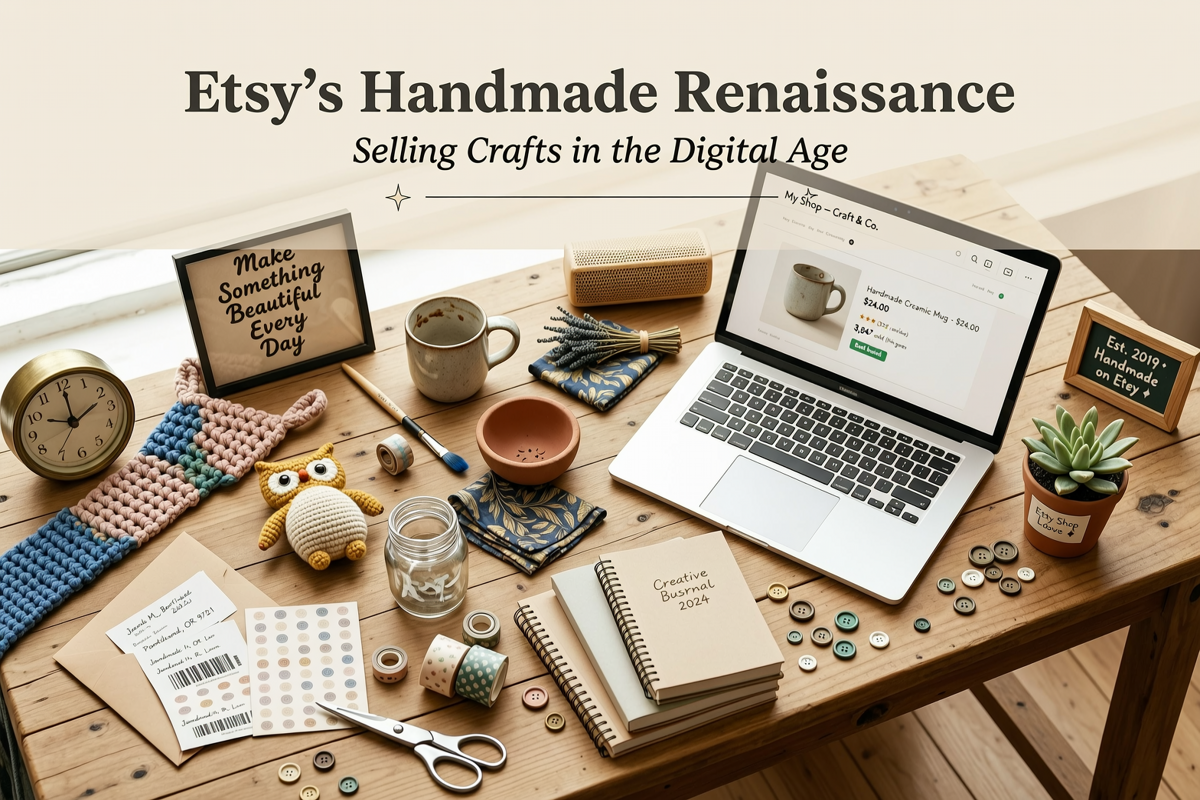
Etsy's Handmade Renaissance: Selling Crafts in the Digital Age
Discover how Etsy empowers modern artisans, turning craft passion into profit through niche communities, smart SEO, and creative entrepreneurship.
In a world increasingly dominated by mass production and faceless e-commerce giants, Etsy stands out as a rare sanctuary for makers, collectors, and appreciators of the handmade. What began in 2005 as a modest online marketplace for vintage goods and handcrafted items has blossomed into a global community of over 90 million active buyers and nearly 9 million sellers. For artists and crafters, Etsy is not just a storefront; it is a launchpad that transforms hobbyist passion into sustainable, meaningful livelihoods. But navigating this handmade renaissance requires more than just listing a product and waiting for orders. It demands craftsmanship in both the physical and digital senses, a willingness to learn the invisible rules of search algorithms, and a deep understanding of the unique culture that makes Etsy feel more like a creative cooperative than a cold marketplace.
Why Etsy Remains the Home for Handmade
Unlike broader platforms such as Amazon or eBay, Etsy was built specifically with the artisan in mind. Its policies still insist that items must be handmade, vintage (at least 20 years old), or craft supplies. That curation has created a safe haven where buyers come with a mindset of valuing authenticity, character, and the human touch. A handmade ceramic mug on Etsy carries a story; a hand-woven linen scarf carries hours of dedication. This emotional resonance is something mass retailers simply cannot replicate, and it forms the foundation of Etsy's enduring appeal.
For the modern crafter, this translates directly to consumer trust. Buyers on Etsy are often willing to pay a premium for items that are unique, customizable, or produced in small batches. According to recent industry surveys, a majority of Etsy shoppers say they prefer buying from independent makers because they want to support small businesses and reduce their environmental footprint. This shift in consumer consciousness is the wind beneath the wings of the handmade movement. Etsy provides the infrastructure, the search tools, and the payment processing, but the heart of the marketplace remains the incredible diversity of human creativity.
Crafting a Shop That Stands Out
With millions of active listings, standing out in Etsy's bustling corridors is both an art and a science. A beautiful product is the baseline; the digital presentation is what earns the click. Your shop's visual identity is your first handshake with a potential buyer, and it needs to convey professionalism while retaining warmth.
Photography and First Impressions
Lighting is your best friend. Poorly lit, cluttered photos are the quickest way to send customers scrolling past. Natural daylight, a neutral background, and a consistent style across your listing images build a recognizable brand. Show the item in use, include a close-up of the texture or craftsmanship, and consider adding a photo that reflects scale. Etsy also allows video in listings; a short 10-second clip of you stitching, painting, or assembling your product can dramatically increase engagement. Remember, you are not just selling an item; you are selling your process, your passion, and the subtle imperfections that make it yours.
Keywords and SEO for Creative Sellers
The craft of SEO on Etsy is surprisingly linguistic. You need to think like your customer. What words would they type into the search bar? If you sell hand-poured soy candles, use phrases like “soy candle gift”, “small batch candle”, or “scented candle for bathroom” in your titles and tags. Etsy's search algorithm values exact phrase matches, so repeating keywords in both the title and tags is beneficial. But avoid keyword stuffing; the description should read naturally, telling the story of the item while seamlessly integrating useful terms. Long-tail keywords, which are more specific and less competitive, are often the secret to a new shop's success. For example, instead of just “necklace”, try “dried flower pendant necklace for bridesmaids”.
Navigating the Business Side of Art
Many artisans step into Etsy with little to no business background. The platform has traditionally worn its learning curve lightly, but the reality is that running a successful shop involves much more than making. Pricing, shipping, and customer service are the pillars that support your creative output.
- Pricing with confidence: Factor in materials, labor, overhead, and platform fees. Many new sellers underprice out of fear, which in turn devalues handmade work for everyone. Research competitors, but do not undervalue your own skill. A useful rule of thumb is to multiply the cost of materials by two or three, then add an hourly rate for your time.
- Streamlined shipping: Offer clear shipping deadlines and consider offering a faster, upgradeable option at checkout. Use printed labels from Etsy to save time and access seller discounts. A well-packaged item arrives as a physical extension of your brand; include a handwritten thank-you note or a small branded sticker to generate delight.
- Communication is key: Respond to messages quickly and politely. Proactive communication about an inevitable delay or restock goes a long way. Buyers remember how they were treated, and a positive experience results in five-star reviews, which are the social proof that powers your future sales.
The Power of Community and Brand Story
Etsy is unique in its emphasis on the people behind the products. The platform actively promotes the idea of “being human” in business, which is a refreshing antidote to corporate anonymity. Take advantage of this by crafting a compelling “About” page that tells your personal journey. Why did you start crafting? What inspires your designs? What does making this object mean to you? This narrative builds a deep emotional connection with buyers who are increasingly seeking meaning in their purchases.
Beyond the individual storefront, the broader Etsy community is a goldmine of support. Forums and seller teams provide advice on everything from packaging to photography to taxes. Because many sellers are operating from home studios, these virtual connections can be vital lifelines. There is a collective understanding that every success is a shared victory. Engaging with this community not only enriches your own experience but also signals to Etsy's algorithm that you are an active, invested participant, which can subtly boost your visibility.
Evolving Trends: Personalization and Sustainability
To stay ahead in 2025, savvy Etsy sellers are riding two major waves: personalization and sustainability. Modern buyers do not just want a product; they want a product that feels exclusively theirs. Custom engraving, made-to-order color choices, or simple monogramming can differentiate your shop from thousands of competitors. Offer a clear “personalize now” field in your listings and be explicit about how customization may alter production times.
Simultaneously, the push for eco-friendly goods is a natural fit for handmade. Crafters often use repurposed materials, non-toxic finishes, or local resources. Communicate these efforts clearly in your descriptions. If your packaging is plastic-free or biodegradable, say so. Consumers are actively looking for ways to reduce their carbon footprint, and handmade, small-batch items are a powerful answer. Etsy itself has committed to offsetting shipping emissions, and it applauds sellers who align with its mission to “keep commerce human.”
In essence, succeeding on Etsy is about blending the soul of an artist with the strategy of an entrepreneur. It is a journey of continuous learning, experimenting with new techniques, and refining your craft in every sense of the word. The platform has evolved, but its core promise remains: anyone with a craft and a dream can find their audience. Whether you are a knitter, a woodworker, a ceramics maker, or a jewelry designer, Etsy offers a space where your art is not a relic of the past but a thriving part of the modern economy. So polish your lens, sharpen your keyword research, and let the handmade renaissance carry your work to every corner of a connected world.