ESR Test: What Your Sed Rate Reveals About Inflammation
Learn what the ESR (erythrocyte sedimentation rate) blood test measures, why it's ordered, and how to interpret your results. A simple guide to inflammation markers.
Understanding the ESR Blood Test
The erythrocyte sedimentation rate (ESR), commonly called the “sed rate,” is a simple yet powerful blood test that measures how quickly red blood cells settle at the bottom of a test tube. While it may sound like a basic lab procedure, the ESR provides valuable clues about inflammation in your body. In this article, we’ll explore what the ESR test reveals, why your doctor might order it, and how to interpret the results.
How the ESR Test Works
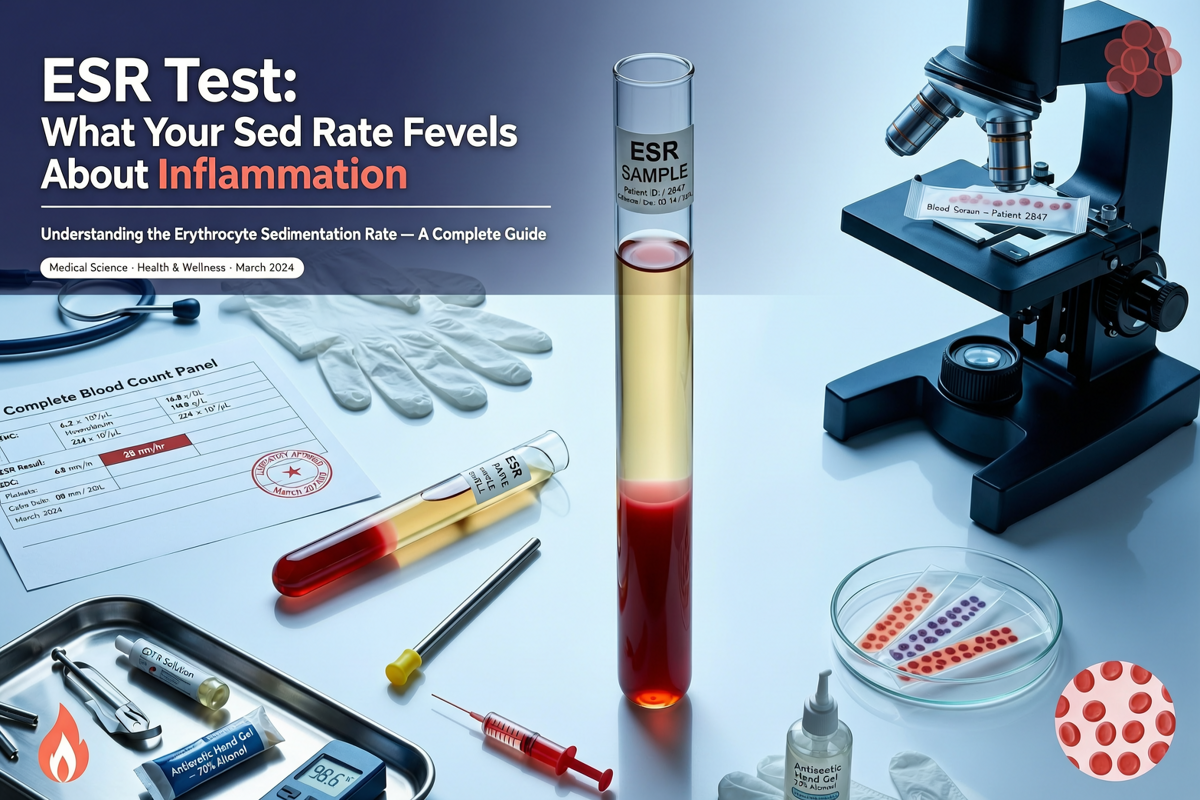
The ESR test is performed by placing a sample of your blood in a tall, thin tube and letting it stand upright for one hour. During that time, red blood cells naturally sink. The distance they fall—measured in millimeters per hour (mm/hr)—is your ESR. In healthy individuals, red blood cells settle slowly. But when inflammation is present, certain proteins in the blood (like fibrinogen) cause red blood cells to clump together and fall faster, raising the ESR.
Why Doctors Order an ESR Test
Doctors use the ESR test for several reasons:
- Detect inflammation: It helps identify the presence of an inflammatory process, though it cannot pinpoint the cause.
- Monitor disease activity: For chronic conditions like rheumatoid arthritis or lupus, ESR levels can track how well treatment is working.
- Screen for certain conditions: A very high ESR may suggest temporal arteritis, polymyalgia rheumatica, or infections.
- Rule out other issues: A normal ESR can help exclude inflammatory diseases.
Normal ESR Ranges
ESR values vary by age and gender. Typical normal ranges are:
- Men under 50: 0–15 mm/hr
- Women under 50: 0–20 mm/hr
- Men over 50: 0–20 mm/hr
- Women over 50: 0–30 mm/hr
- Children: 0–10 mm/hr
Note that these are general guidelines; labs may have slightly different reference ranges. Also, ESR naturally increases with age and is higher in women.
What High ESR Levels Mean
An elevated ESR indicates inflammation but does not diagnose a specific disease. Common causes include:
- Infections: Bacterial, viral, or fungal infections can raise ESR.
- Autoimmune diseases: Rheumatoid arthritis, lupus, and vasculitis often cause high ESR.
- Chronic kidney disease: Impaired kidney function can elevate ESR.
- Cancer: Some cancers, especially multiple myeloma and lymphoma, are associated with high ESR.
- Pregnancy: ESR naturally rises during pregnancy.
- Medications: Certain drugs, like oral contraceptives, can increase ESR.
Very high ESR (above 100 mm/hr) is often linked to serious infections, autoimmune flares, or malignancies and warrants prompt investigation.
What Low ESR Levels Mean
Low ESR is less common and usually not concerning. Possible causes include:
- Polycythemia: An excess of red blood cells can slow sedimentation.
- Heart failure: Congestive heart failure may lower ESR.
- Hypofibrinogenemia: Low fibrinogen levels reduce ESR.
- Certain medications: Aspirin, corticosteroids, and NSAIDs can lower ESR.
Limitations of the ESR Test
While ESR is a useful screening tool, it has limitations:
- Not specific: It cannot identify the cause of inflammation.
- Influenced by many factors: Age, gender, anemia, and blood cell counts affect results.
- May be normal in some inflammatory conditions: For example, in some rheumatic diseases, ESR can be normal.
Therefore, ESR is often used alongside other tests like C-reactive protein (CRP) to get a fuller picture.
ESR vs. CRP: What's the Difference?
Both ESR and CRP measure inflammation, but they work differently. CRP is produced by the liver in response to acute inflammation and changes quickly. ESR reflects more chronic inflammation and changes slowly. Doctors may order both to differentiate between acute and chronic processes.
How to Prepare for an ESR Test
No special preparation is needed for an ESR test. It is a simple blood draw from a vein in your arm. However, inform your doctor about all medications and supplements you take, as some can affect results. Fasting is not required.
Interpreting Your Results
If your ESR is elevated, your doctor will consider your symptoms, medical history, and other test results to determine the next steps. Additional tests might include imaging studies, specific antibody tests, or biopsies. Remember, an abnormal ESR alone does not confirm a diagnosis—it is a clue, not a verdict.
When to Talk to Your Doctor
If you have symptoms like unexplained fever, joint pain, fatigue, weight loss, or signs of infection, an ESR test can help guide the diagnostic process. Discuss your results with your healthcare provider to understand what they mean for your health.
Key Takeaways
- ESR is a simple blood test that measures inflammation.
- High ESR suggests inflammation but does not diagnose a specific condition.
- Normal ranges vary by age and gender.
- ESR is often used with other tests for a complete assessment.
- Always consult your doctor for personalized interpretation.
Understanding your ESR can empower you to take an active role in your health. If you have concerns about inflammation or an underlying condition, ask your doctor about the ESR test and what your numbers might mean.