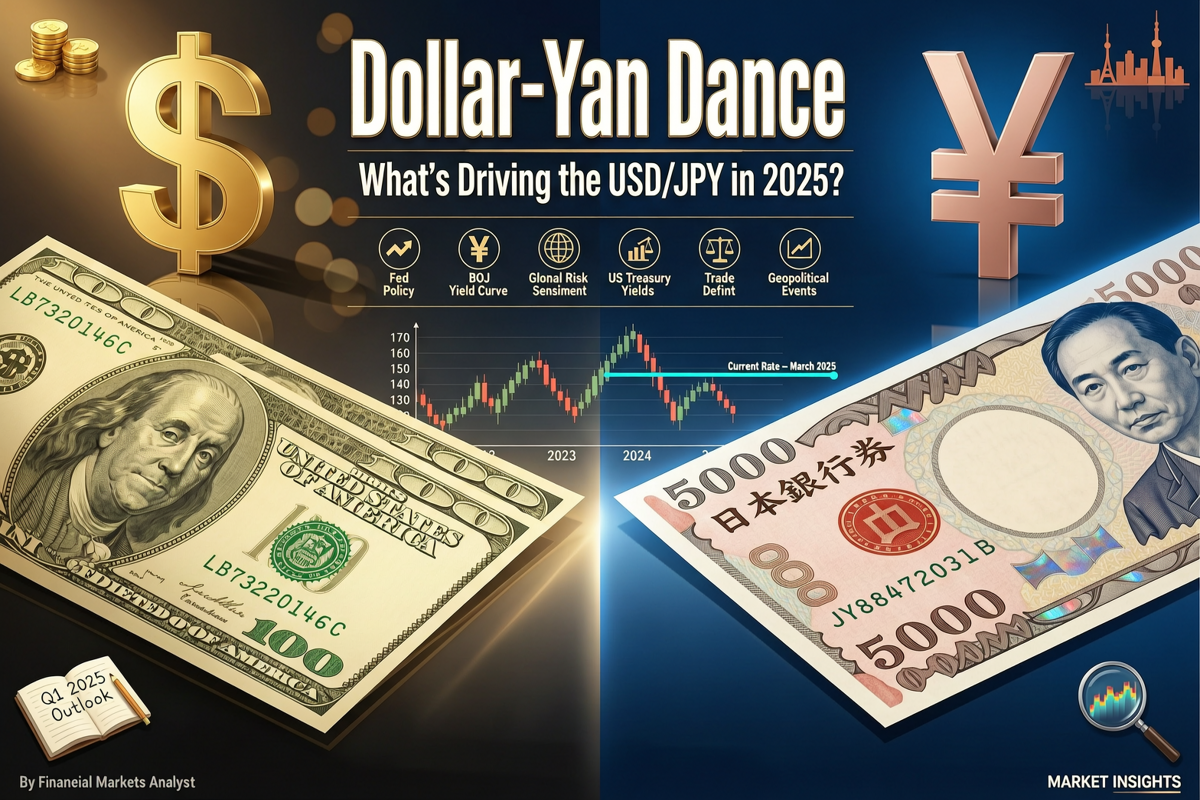
Dollar-Yen Dance: What's Driving the USD/JPY in 2025?
Explore the key forces behind the dollar-yen exchange rate in 2025, from BoJ and Fed policies to Japan's fiscal outlook and the carry trade revival.
The Ever-Shifting Tides of USD/JPY
The Japanese yen has long been a bellwether for global risk sentiment and monetary divergence. In 2025, the dollar-yen pair remains at the mercy of a complex interplay between the Bank of Japan's ultra-loose policy stance and the Federal Reserve's tightening cycle. Understanding these dynamics is essential for forex traders, corporate treasurers, and anyone with exposure to Japan's economy.
Bank of Japan: A Slow Revolution
The BoJ under Governor Kazuo Ueda has made incremental moves away from yield curve control, but still maintains negative short-term rates. The central bank's cautious approach stems from Japan's entrenched deflationary mindset, though inflation has finally edged above 2%. Key considerations include:
- Yield Curve Control Tweaks: The BoJ widened the band around its 10-year yield target, allowing rates to rise modestly. This has provided some support for the yen, but policy normalization remains gradual.
- GDP growth: Japan's economy expanded 1.8% in 2024, but faces headwinds from an aging population and stagnant wages. The BoJ is wary of choking off recovery.
- Inflation persistence: Core CPI remains above 3%, but the BoJ sees this as cost-push rather than demand-driven. Until wage growth becomes robust, true tightening is unlikely.
Federal Reserve: Higher for Longer
Across the Pacific, the Fed has held interest rates at 5.5% since July 2024, with markets pricing in rate cuts only in late 2025. The resilience of the US economy, fueled by strong consumer spending and AI investment, has delayed the dovish pivot.
- Interest rate differential: The gap between US and Japanese policy rates is roughly 5.5 percentage points—a massive incentive for carry trades, where investors borrow cheap yen to buy dollar-denominated assets. This keeps the yen under pressure.
- US data dependency: Every CPI or NFP release causes sharp moves in USD/JPY. A strong US jobs report tends to spike the pair above 150, while signs of cooling boost the yen.
- Global risk appetite: As a safe-haven currency, the yen strengthens during crises (e.g., geopolitical tension or market crashes). In 2025, ongoing conflicts and trade uncertainty have created episodic yen rallies.
Japan's Fiscal and Trade Dynamics
Japan's current account surplus has narrowed due to higher import costs for energy and food, which the weak yen exacerbates. The government has intervened verbally (and occasionally directly) to stem excessive yen depreciation, but such interventions have only fleeting impact.
- Trade balance: Japan remains a net exporter, but the services deficit (tourism and tech payments) has grown. A weaker yen boosts export competitiveness but hurts household purchasing power.
- Government debt: At over 260% of GDP, Japan's debt load makes the BoJ hesitant to raise rates sharply. Higher rates would balloon debt service costs, potentially triggering a fiscal crisis.
- Foreign reserves: Japan holds over $1.2 trillion in reserves, enough for multiple intervention rounds, but the US and G7 partners frown upon prolonged intervention.
Technical and Sentiment Factors
From a positioning perspective, speculative shorts on the yen are near multi-year highs, signaling that the market expects further weakness. However, such crowded trades can unwind violently, as seen in brief yen spikes above 145 in early 2025.
Key levels to watch: 152 (2023 high) provides resistance; a break could target 155. Support at 144 (200-day moving average) and 140 (psychological round number). Options market shows elevated demand for downside protection on the yen, reflecting hedging against a sudden reversal.
Outlook for the Second Half of 2025
The path of USD/JPY hinges on two pivotal events: the BoJ's July meeting (where it may signal further normalization) and the Fed's first rate cut (likely September). Most analysts expect the pair to trade in a 145–155 range, with bias toward yen appreciation if the BoJ acts or risk-off sentiment surges.
Bullish yen scenario: BoJ hikes rates to 0.5%, Fed cuts twice, and geopolitical turmoil sparks risk aversion. USD/JPY could drop to 135.
Bearish yen scenario: BoJ stays on hold, Fed holds rates, and global risk-on continues. USD/JPY could test 158, breaching the 1990 record.
In conclusion, the dollar-yen dance continues to be dictated by monetary policy divergence, carry trade flows, and Japan's structural vulnerabilities. Traders should remain nimble, as the pair's volatility is not for the faint-hearted.