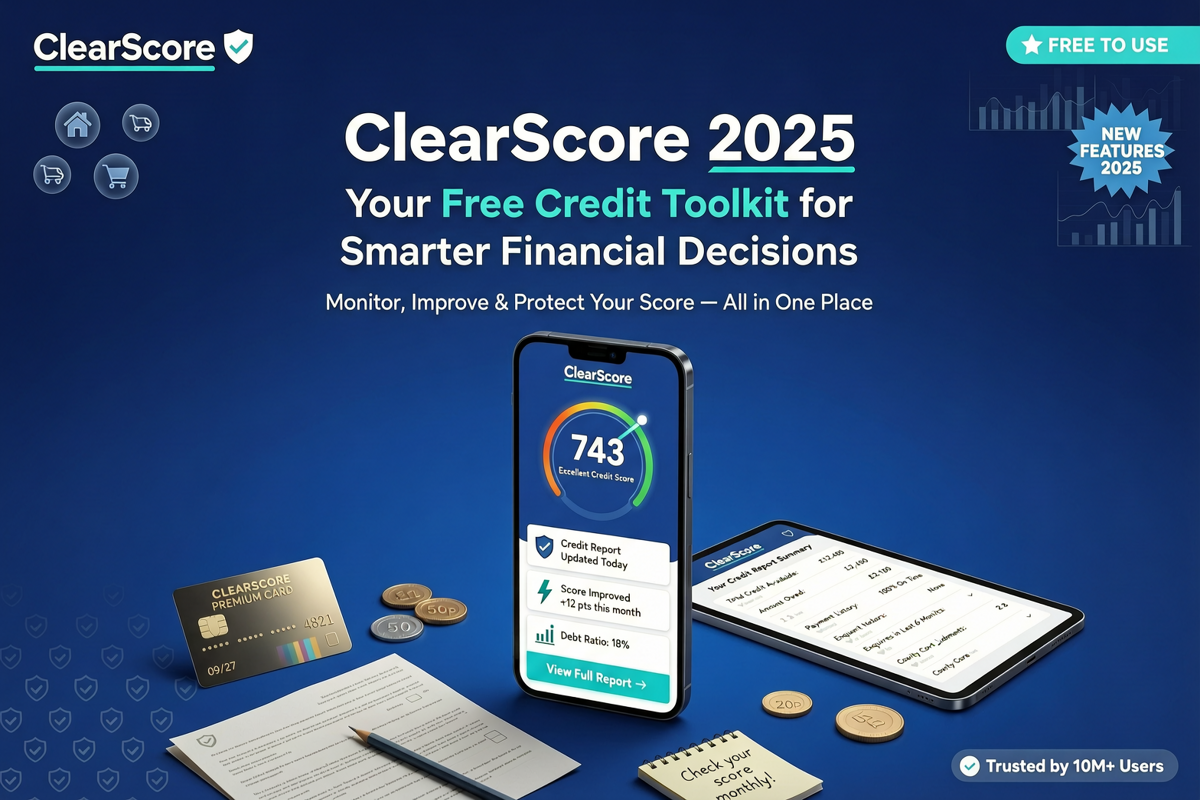
ClearScore 2025: Your Free Credit Toolkit for Smarter Financial Decisi
Discover how ClearScore's free credit monitoring and personalized tips can help you improve your credit score and make informed financial decisions in 2025.
Your credit score is one of the most important numbers in your financial life. It affects your ability to get a mortgage, car loan, credit card, or even rent an apartment. Yet many people remain in the dark about their credit health, often discovering issues only when they are denied credit. ClearScore, a leading free credit monitoring service, aims to change that by putting your credit data front and center. As we move into 2025, ClearScore continues to evolve, offering more tools, insights, and personalized advice to help you take control of your financial future.
What Is ClearScore and How Does It Work?
ClearScore is a UK-based credit monitoring service that provides users with free access to their credit score and report from one of the major credit reference agencies (typically Equifax, though ClearScore also offers multi-bureau reporting through paid plans). Founded in 2015, it has grown to millions of users by demystifying credit scores and offering actionable tips. The service is funded by recommending financial products, such as credit cards and loans, that match your credit profile. This model allows ClearScore to offer its core service for free, making credit education accessible to everyone.
Signing up is simple: you create an account, verify your identity, and within minutes you can see your credit score and a full breakdown of your credit report. ClearScore updates your score every 30 days, but you can check your report as often as you like without affecting your score. The platform also provides a credit score simulator, which shows how different actions—like paying off a credit card or missing a payment—might impact your score.
Key Features of ClearScore in 2025
As of 2025, ClearScore has expanded its feature set to help users not only monitor but also actively improve their credit. Here are some standout features:
- Free monthly credit score and report: Get your Equifax credit score and a detailed report every month at no cost. The report includes all your accounts, payment history, and any negative markers.
- Credit score simulator: Experiment with different financial scenarios to see how they could affect your score. This helps you make informed decisions before taking action.
- Personalized recommendations: ClearScore analyzes your credit profile and suggests financial products that you are likely to be approved for, such as credit cards with better rates or loans with lower interest.
- Alert system: Receive notifications when changes happen on your credit report, such as new accounts opened in your name or a missed payment reported. This early warning can help you detect identity theft quickly.
- ClearScore Protect: For a monthly fee, you can get multi-bureau monitoring (including Experian and TransUnion), identity theft insurance, and dark web monitoring. This is a premium upgrade for those who want extra security.
- Expert guides and tips: The platform offers a wealth of educational content, from beginner guides to advanced tips on improving your credit utilization and managing debt.
How to Use ClearScore to Improve Your Credit
Knowing your score is just the first step. To truly benefit, you need to act on the insights ClearScore provides. Here are practical ways to use the platform to boost your credit health in 2025:
Understand Your Credit Utilization
One of the biggest factors in your score is credit utilization—the percentage of your available credit you are using. ClearScore shows you this number clearly. Aim to keep your utilization below 30% across all accounts. If you are above that, consider paying down balances or requesting a credit limit increase.
Check for Errors
Mistakes on credit reports are more common than you think. When you get your free report from ClearScore, review each account for accuracy. Look for incorrect balances, accounts that do not belong to you, or late payments that you actually made on time. If you find an error, you can dispute it directly through ClearScore or with the credit bureau. Correcting even one mistake can improve your score.
Use the Simulator for Big Decisions
Thinking about applying for a mortgage or a new car loan? Before you apply, use the simulator to see how opening a new credit account might affect your score. This can help you time your application for the best possible outcome.
Set Up Alerts
Enable notifications so you are instantly aware of any suspicious activity. If someone tries to open a credit account in your name, you will be alerted and can take action immediately. This feature is especially important in an era of increasing identity fraud.
Common Misconceptions About Free Credit Scores
Many people are skeptical of free credit services, worrying that they are too good to be true or that they will hurt their credit. Let's clear up a few myths:
- Myth: Checking your own credit hurts your score. Fact: Checking your own credit through a service like ClearScore is a "soft inquiry" and does not affect your score at all. Only hard inquiries from lenders when you apply for credit can temporarily lower your score.
- Myth: Free scores are not accurate. Fact: The score ClearScore provides is the same score that many lenders use. While there are different scoring models (e.g., FICO vs. VantageScore), the Equifax score you get from ClearScore is a legitimate indicator of your credit health.
- Myth: You only need to check your credit once a year. Fact: Your credit report can change month to month. Regular monitoring helps you catch errors early and track your progress as you work to improve your score.
The Future of Credit Monitoring with ClearScore
As we progress through 2025, ClearScore is likely to integrate more artificial intelligence to provide hyper-personalized advice. Expect features like predictive score modeling, which forecasts your future score based on your spending habits, and more granular insights into what factors are helping or hurting you. Additionally, with the rise of open banking, ClearScore may begin to offer cash flow analysis, helping users understand how their income and spending patterns affect their creditworthiness. The goal is to move beyond a simple number and give users a holistic view of their financial health.
Conclusion
ClearScore has democratized access to credit information, giving everyone the tools to build and maintain good credit. In 2025, it remains an invaluable resource for anyone who wants to take charge of their financial life—whether you are just starting your credit journey or looking to optimize your score for a major purchase. Best of all, the core service is free, so there is no excuse not to check your score today. With regular monitoring and the right actions, you can unlock better financial opportunities and peace of mind.