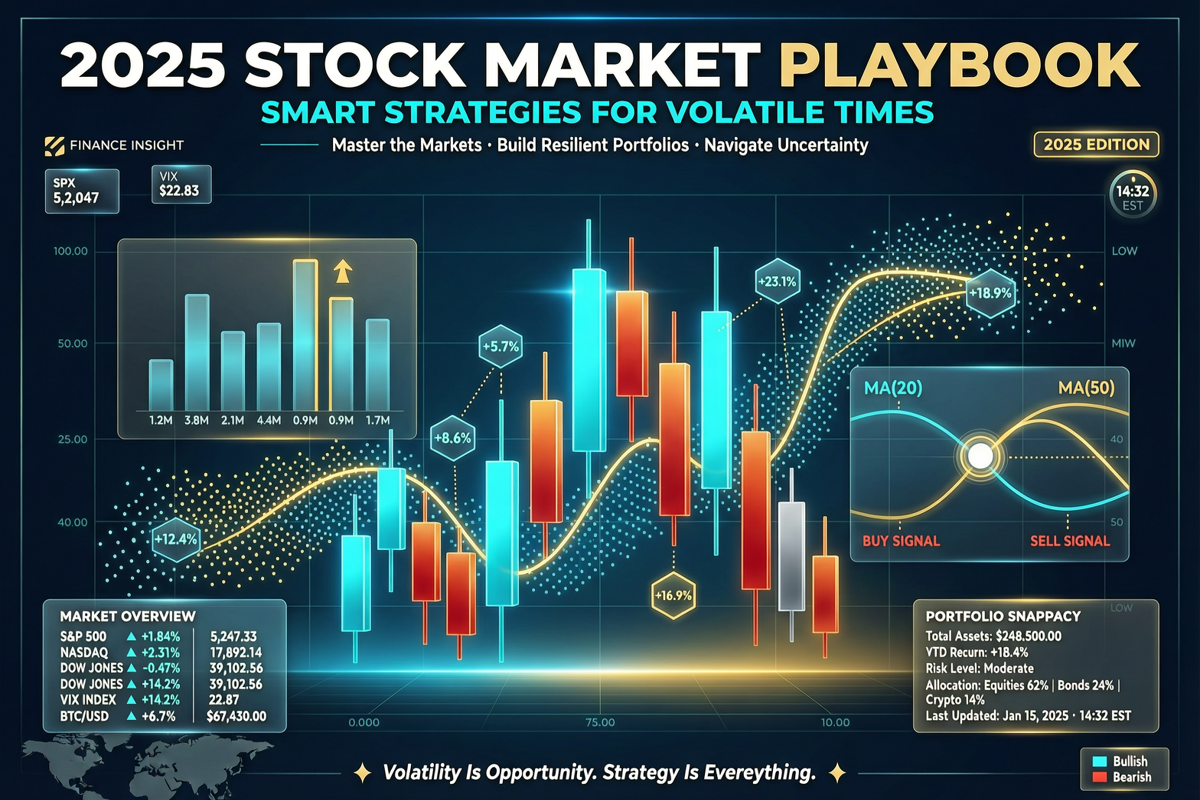
2025 Stock Market Playbook: Smart Strategies for Volatile Times
Discover essential stock market strategies for 2025. Learn how to manage volatility, identify trends, and build a resilient portfolio in a shifting economic landscape.
Understanding Market Volatility
The stock market in 2025 is no stranger to volatility. With geopolitical tensions, shifting monetary policies, and rapid technological advancements, price swings have become the norm rather than the exception. For investors, understanding what drives these fluctuations is the first step toward building a strategy that can weather the storms. Volatility isn't inherently bad—it creates opportunities for those who are prepared. The key is to differentiate between temporary noise and structural shifts in the market.
Several factors contribute to daily volatility. Algorithmic trading, for instance, now accounts for a significant portion of trading volume, amplifying both upward and downward moves. Additionally, the rise of retail investors, fueled by commission-free trading apps and social media forums, has introduced new dynamics. These participants often react swiftly to news or sentiment, causing rapid short-term swings. Meanwhile, macroeconomic data releases—such as employment reports, inflation figures, and central bank decisions—continue to be major catalysts.
Key Drivers of Stock Market Movements
In 2025, three primary forces are shaping stock prices: artificial intelligence (AI) adoption, global supply chain realignment, and the energy transition. Companies that successfully integrate AI into their operations tend to see performance improvements, which attracts investor capital. Conversely, those lagging in automation face margin compression. Supply chain shifts, driven by geopolitical tensions and efforts to reduce dependence on single sources, are creating winners and losers across sectors. Finally, the push toward renewable energy and electric vehicles is reshaping industries, with traditional energy firms pivoting and new entrants gaining ground.
Interest rate expectations remain a critical driver. Central banks in major economies are walking a tightrope between controlling inflation and supporting growth. Any change in the rate outlook can trigger significant sector rotation. For example, technology stocks often benefit from lower rates, while financials may fare better in rising rate environments. Investors must stay attuned to central bank rhetoric and economic indicators.
Strategies for Navigating Turbulence
To succeed in volatile markets, consider the following strategies:
- Diversify across asset classes: Don't put all your eggs in one basket. Combine stocks with bonds, commodities, and real estate investment trusts (REITs) to reduce portfolio risk.
- Focus on quality: Invest in companies with strong balance sheets, consistent cash flow, and competitive advantages. These tend to be more resilient during downturns.
- Use dollar-cost averaging: Regularly invest a fixed amount regardless of market conditions. This smooths out purchase prices over time and reduces the impact of short-term volatility.
- Set stop-loss orders: Protect your downside by specifying a price at which a security is automatically sold to limit losses.
- Stay informed but avoid overtrading: Monitor financial news and market data, but resist the urge to react impulsively. Emotional decisions often lead to buying high and selling low.
The Role of Technology and Data
Technology offers powerful tools for modern investors. Robo-advisors can manage portfolios based on your risk tolerance, while advanced analytics platforms help identify trends and anomalies. Many brokerage firms now provide access to real-time level 2 data, allowing traders to see order flow and liquidity. However, note that complexity doesn't always yield better returns. Often, simple, evidence-based strategies outperform intricate ones over time.
Sentiment analysis tools, which parse news articles, earnings call transcripts, and social media, can gauge market mood. These are especially useful for short-term traders. For long-term investors, understanding company fundamentals and industry cycles remains paramount. Using technology to automate routine tasks frees up time for deeper research.
Looking Ahead: Long-Term Investing in 2025
While tactical moves are important, never lose sight of the long game. Historically, the stock market has always recovered from downturns and reached new highs. Investors who stayed invested through crises like 2008 and 2020 have been rewarded. In 2025, demographics and innovation continue to be powerful tailwinds. The aging population in developed countries drives demand for healthcare and financial services, while younger generations fuel consumption and tech adoption.
Another trend to watch is the increasing focus on sustainability. Environmental, social, and governance (ESG) criteria are influencing investment decisions. Companies with strong ESG practices often exhibit lower risk and better long-term performance. Integrating ESG factors into your portfolio can align your investments with your values and potentially enhance returns.
Finally, maintain a cash reserve to take advantage of market dips. When volatility strikes, having liquidity allows you to buy quality assets at discounted prices. This contrarian approach, while psychologically challenging, can significantly boost portfolio returns over time.
Conclusion
The stock market in 2025 offers both challenges and opportunities. By understanding the key drivers of volatility and implementing smart strategies, investors can navigate uncertain times with confidence. Remember to stay disciplined, leverage technology wisely, and keep a long-term perspective. The markets will always have ups and downs, but a well-thought-out plan is your best compass.